Nio Equipment and EngineeringNIO Equipment
ISO & CE Certified PAN India Service 12-Month Warranty Expert Installation 500+ Installations

Industrial Cranes

NIO Equipment manufactures customized Industrial Cranes designed for safe, precise, and efficient lifting, positioning, loading, unloading, and material handling across manufacturing plants, warehouses, fabrication shops, maintenance facilities, and logistics operations.

Our Product Range
Industrial material handling solutions engineered for reliability and performance
7 Products

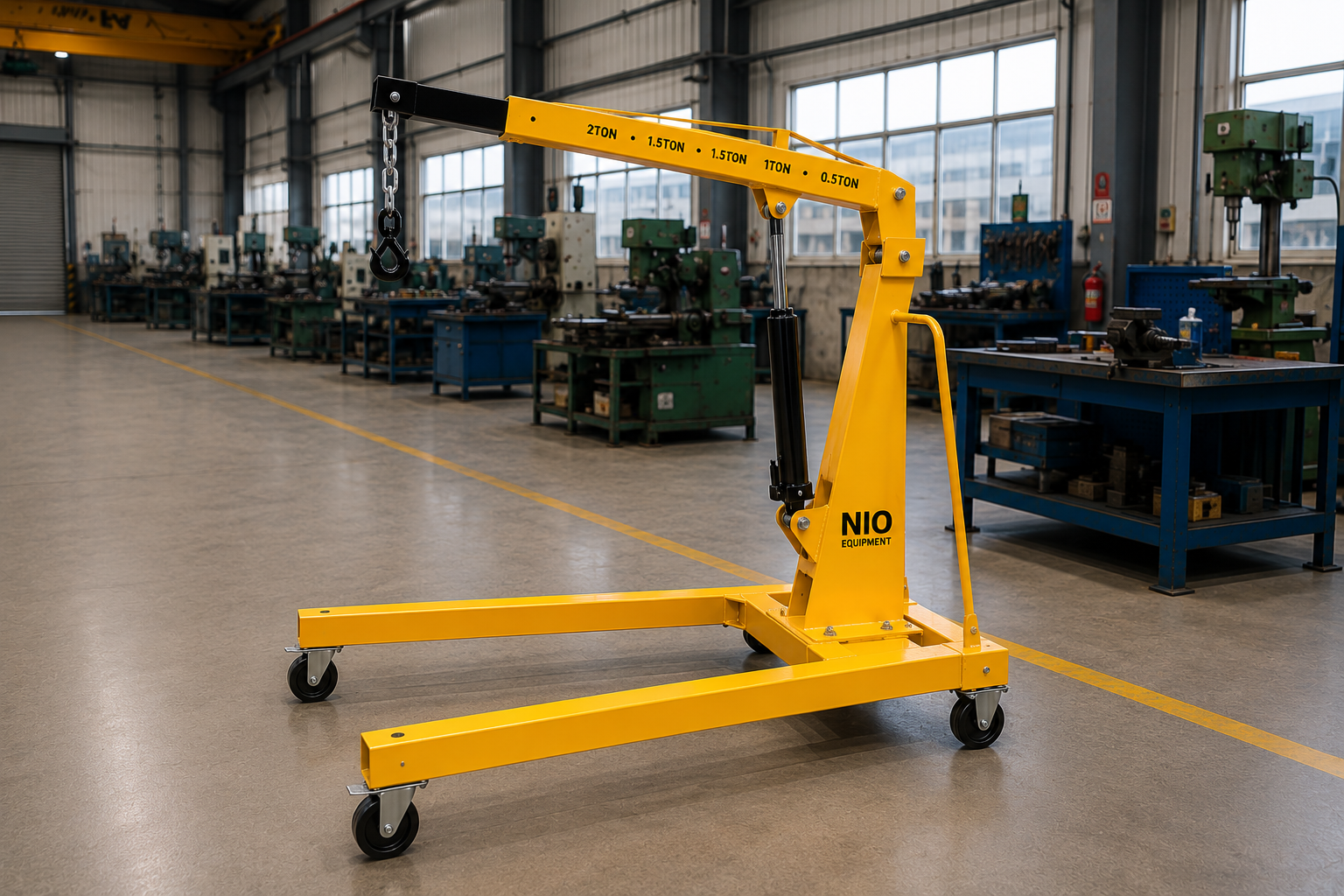
Floor Cranes

Jib Cranes

Gantry Cranes

View All Products →

Popular Applications

Machine MaintenanceMachine InstallationDie & Mold HandlingAssembly Line Material HandlingWorkstation Component LiftingProduction Line SupportFabrication Shop Material HandlingWelding Shop Material TransferHeavy Equipment PositioningMotor & Gearbox InstallationPump & Compressor MaintenanceWarehouse Material HandlingLoading & Unloading Heavy EquipmentTool Room OperationsRaw Material HandlingFinished Goods HandlingEngineering Workshop LiftingIndustrial Equipment ServicingPlant Maintenance OperationsIndustrial Component Assembly

About Industrial Cranes

Key Features

Customized Industrial Crane Solutions
Floor Cranes
Hydraulic Floor Cranes
Mobile Floor Cranes
Jib Cranes
Wall Mounted Jib Cranes
Pillar Mounted Jib Cranes
Gantry Cranes
Heavy-Duty Structural Steel Construction
Smooth Hydraulic and Mechanical Lifting
Precision Load Positioning
Heavy-Duty Castor Mounted Mobility Options

Industries We Serve

ManufacturingWarehousingLogistics & DistributionAutomotiveEngineeringFabricationHeavy EngineeringSteel & Metal ProcessingMachine BuildingPower GenerationPharmaceuticalFMCGFood & BeveragePackagingPaper & PrintingChemicalTextileCementElectrical & ElectronicsMaintenance & Repair Facilities

How Industrial Cranes Work

Applications

Benefits

Selection Guide

Why Choose NIO Equipment for Industrial Cranes

Maintenance Guide

Regular maintenance is essential for ensuring the safety, reliability, performance, and long service life of Industrial Cranes. Although Industrial Cranes are designed for demanding industrial environments and continuous material handling operations, their performance depends significantly on routine inspection, preventive maintenance, timely replacement of worn components, and adherence to recommended operating practices. A well-planned maintenance program minimizes unexpected breakdowns, reduces production downtime, improves workplace safety, extends equipment life, and lowers overall lifecycle costs. Every maintenance program should begin with daily pre-operation inspections. Before starting lifting operations, operators should visually inspect the crane structure for any signs of physical damage, deformation, loose fasteners, corrosion, excessive wear, or abnormal conditions. Structural members, boom assemblies, mast sections, support frames, mounting brackets, and welded joints should be examined carefully to verify that the crane remains in safe operating condition. The lifting mechanism requires routine inspection before every operating shift. Hooks should be checked for cracks, deformation, excessive wear, or damage. Safety latches should operate correctly and close completely after attaching lifting accessories. Chains, wire ropes, lifting slings, and other load-bearing components should be inspected for broken strands, elongation, corrosion, twisting, abrasion, or any signs of deterioration. Damaged lifting accessories should never be used during crane operation. Hydraulic Floor Cranes and Mobile Floor Cranes require regular inspection of the hydraulic system. Hydraulic cylinders should be examined for oil leakage, damaged seals, scoring, corrosion, or unusual movement during operation. Hydraulic hoses and fittings should be inspected for leakage, cracks, swelling, abrasion, loose connections, or signs of aging. Maintaining clean hydraulic oil and monitoring oil levels helps ensure smooth lifting performance while protecting hydraulic components from premature wear. Manual hydraulic pumps should operate smoothly without excessive effort or irregular resistance. Operators should verify that lifting and lowering functions remain consistent throughout the entire operating range. Any unusual noises, jerky movement, pressure loss, or slow lifting response should be investigated immediately before returning the crane to service. Electric hoists, chain hoists, and wire rope hoists used on Jib Cranes and Gantry Cranes require periodic inspection according to the manufacturer's recommendations. Electrical cables, pendant controls, motors, gearboxes, limit devices, brakes, and control systems should be checked for proper operation. Hoisting mechanisms should lift and lower loads smoothly without abnormal vibration, excessive noise, or inconsistent movement. Moving components such as pivot pins, bearings, rotating joints, wheels, castors, rollers, and rotating mechanisms should be lubricated at recommended intervals using appropriate lubricants. Proper lubrication reduces friction, minimizes wear, prevents corrosion, and ensures smooth crane movement during daily operation. Neglecting lubrication can significantly reduce component life and increase maintenance costs. Mobile Floor Cranes require additional inspection of wheels and castors. Wheels should rotate freely without excessive play, flat spots, cracks, or bearing damage. Braking mechanisms should function correctly to secure the crane during lifting operations. Smooth mobility is essential for safe positioning and controlled load handling throughout the facility. Wall Mounted Jib Cranes and Pillar Mounted Jib Cranes should undergo periodic inspection of anchor bolts, mounting brackets, structural supports, and foundation integrity. Any looseness, movement, cracking, or structural deterioration should be addressed immediately to maintain safe operating conditions. Gantry Cranes should also be inspected for beam alignment, leg stability, wheel condition, and overall structural integrity. All fasteners should be checked periodically to ensure they remain properly tightened. Continuous lifting operations may gradually loosen bolts due to vibration and repeated loading cycles. Maintaining correct fastener torque helps preserve structural stability and operational safety. The crane should always be kept clean and free from accumulated dust, grease, metal chips, welding debris, paint residue, chemicals, or other contaminants that could interfere with moving parts or conceal developing defects. A clean crane is easier to inspect and helps identify leaks, wear, or damage at an early stage. Preventive maintenance schedules should be developed based on actual operating conditions rather than fixed calendar intervals alone. Cranes used continuously in demanding production environments generally require more frequent inspections than equipment used only occasionally for maintenance work. Recording operating hours, maintenance history, inspections, repairs, and component replacements allows maintenance teams to identify wear patterns and plan servicing proactively. Operators should be trained to recognize abnormal operating conditions such as unusual noises, excessive vibration, uneven lifting, hydraulic leakage, control malfunction, or structural movement. Prompt reporting of these conditions allows maintenance personnel to correct minor issues before they develop into major failures or safety hazards. Only genuine replacement components or manufacturer-approved equivalents should be used during maintenance and repair activities. Substituting unsuitable components may reduce crane performance, compromise safety, and shorten equipment life. Repairs involving structural members, lifting mechanisms, or load-bearing components should always be performed by qualified personnel following approved engineering practices. A documented preventive maintenance program not only improves crane reliability but also contributes to safer lifting operations, reduced downtime, longer equipment life, improved productivity, and lower total cost of ownership. By combining routine inspections, scheduled servicing, operator awareness, proper lubrication, timely component replacement, and periodic performance verification, Industrial Cranes from NIO Equipment continue to deliver dependable lifting performance across demanding industrial applications for many years.

Safety Guide

Safety is the most critical aspect of every Industrial Crane operation. Regardless of the crane type, lifting capacity, or application, every lifting activity involves moving suspended loads that require careful planning, trained operators, properly maintained equipment, and adherence to established safety procedures. A comprehensive safety program not only protects personnel and equipment but also minimizes production downtime, prevents product damage, and improves overall operational efficiency. NIO Equipment designs Industrial Cranes with safety as a primary engineering consideration, but safe operation ultimately depends on proper equipment selection, installation, inspection, maintenance, and responsible operating practices. Before every lifting operation, the crane should undergo a visual inspection to verify that it is in safe working condition. Operators should inspect the structural frame, boom, mast, lifting mechanism, hydraulic components, hooks, chains, wire ropes, fasteners, mounting points, controls, and moving parts for any signs of wear, damage, leakage, corrosion, deformation, or loose components. Any abnormal condition should be corrected before the crane is placed into service. One of the most important safety principles is never exceeding the crane's rated load capacity. Every Industrial Crane is engineered to safely handle loads within a specified working limit. Attempting to lift loads beyond the rated capacity places excessive stress on structural members, lifting mechanisms, hydraulic systems, and supporting structures, significantly increasing the risk of equipment failure or workplace accidents. Operators should always know the approximate weight of the load before beginning any lifting operation. Proper load attachment is equally important. Loads should always be secured using appropriate lifting accessories such as slings, shackles, lifting beams, eye bolts, hooks, or other approved lifting devices suitable for the application. The selected lifting accessories should be compatible with the load characteristics and inspected regularly for wear or damage. Improper rigging can cause load imbalance, uncontrolled movement, or accidental load release during lifting. Load balance should always be verified before raising the load to its full lifting height. The load's center of gravity should remain directly below the lifting point whenever possible to prevent swinging, tilting, or rotation. Operators should initially lift the load only a short distance from the ground to confirm stability before proceeding with the complete lifting operation. Personnel should never stand, walk, or work beneath suspended loads. Even when lifting equipment is functioning correctly, suspended loads always present potential hazards. Safe operating zones should be clearly established around lifting activities, and unauthorized personnel should remain outside these areas until the load has been safely positioned and fully supported. Lifting operations should always be performed using smooth and controlled movements. Sudden acceleration, abrupt stopping, jerky lifting, rapid lowering, or swinging loads generate dynamic forces that may exceed normal operating conditions. Controlled lifting minimizes load movement, improves positioning accuracy, and reduces stress on both the crane and the supported load. The operating area should be evaluated before every lift. Adequate clearance must exist around the crane to prevent collisions with machinery, structures, storage racks, production equipment, piping, electrical installations, vehicles, or personnel. Obstructions should be removed whenever possible, and lifting routes should be planned in advance for complex handling operations. Mobile Floor Cranes require additional attention to floor conditions before operation. The operating surface should be level, stable, and capable of supporting both the crane and the suspended load. Wheels and castors should be locked or stabilized before lifting begins to prevent unintended movement during operation. Loads should never be transported across uneven surfaces while suspended unless specifically permitted by the equipment design and operating procedures. Wall Mounted Jib Cranes and Pillar Mounted Jib Cranes depend on secure structural installation for safe operation. Mounting hardware, anchor bolts, structural supports, and foundation integrity should be inspected regularly to ensure the crane remains securely installed. Any indication of structural movement, looseness, or deterioration requires immediate investigation before continued operation. Operators should always remain attentive during lifting activities. Industrial Cranes should never be left unattended while supporting suspended loads. Constant observation allows operators to respond immediately to abnormal conditions such as unexpected load movement, hydraulic leakage, unusual noises, excessive vibration, or mechanical malfunction. Only trained and authorized personnel should operate Industrial Cranes. Operators should understand the crane's operating principles, load limitations, inspection requirements, emergency procedures, lifting techniques, and workplace safety practices before independently performing lifting operations. Refresher training and periodic safety reviews help maintain consistent operating standards. Personal protective equipment should always be used according to site safety requirements. Depending on the application, this may include safety helmets, protective footwear, gloves, eye protection, high-visibility clothing, hearing protection, or additional equipment required by the facility's safety program. Routine maintenance contributes directly to crane safety. Preventive maintenance ensures that hydraulic systems, lifting mechanisms, structural members, rotating joints, electrical controls, fasteners, and safety devices continue operating as intended. Equipment should never be operated if known defects remain unresolved or if scheduled maintenance has been neglected. Emergency procedures should be clearly established for every lifting operation. Operators should understand how to safely stop the crane, lower suspended loads, isolate power sources where applicable, and respond to equipment malfunctions or workplace emergencies. Emergency controls should remain accessible throughout crane operation. Good housekeeping further improves lifting safety. Work areas should remain free from unnecessary materials, loose tools, oil spills, debris, or obstructions that could interfere with crane movement or create tripping hazards. Well-organized workspaces support safer lifting operations and improve operator visibility. Industrial Cranes should always be used only for their intended material handling applications. They should never be modified without proper engineering approval, used to lift personnel unless specifically designed for that purpose, or operated outside their recommended working conditions. Any modifications affecting structural integrity, lifting mechanisms, controls, or load-bearing components should be evaluated through proper engineering review. By combining correct equipment selection, professional installation, routine inspection, preventive maintenance, trained operators, safe lifting practices, and continuous attention to workplace safety, Industrial Cranes provide dependable and secure material handling throughout manufacturing plants, warehouses, engineering facilities, fabrication workshops, maintenance departments, and industrial operations. NIO Equipment emphasizes safety throughout the complete lifecycle of every Industrial Crane, ensuring customers receive lifting solutions designed to support reliable performance while maintaining the highest standards of industrial safety.

Working Principle

Industrial Cranes operate by transferring lifting forces through a structurally engineered boom or bridge supported by a rigid frame, wall structure, pillar, or mobile base. Depending on the crane type, loads are raised using hydraulic cylinders, manual hydraulic mechanisms, electric hoists, chain hoists, or wire rope hoists. The crane structure safely distributes the applied load while allowing controlled lifting, lowering, rotation, positioning, or transportation of materials within the designated operating area. Proper load distribution, structural stability, and controlled lifting ensure safe and efficient material handling during industrial operations.

Advantages

Improves material handling efficiency
Reduces manual lifting and operator fatigue
Enhances workplace safety
Provides precise load positioning
Supports heavy industrial applications
Improves machine maintenance efficiency
Increases production productivity
Optimizes workstation ergonomics
Reduces material handling time
Maximizes available workspace
Offers customized lifting solutions
Suitable for continuous industrial operation
Supports diverse industrial applications
Improves equipment accessibility
Delivers long service life with proper maintenance

Limitations

  • Requires adequate structural support for fixed installations
  • Wall mounted models depend on building strength
  • Floor space requirements vary by crane type
  • Manual hydraulic models require operator effort
  • Mobile cranes require adequate maneuvering space
  • Safe operation depends on proper load balancing
  • Incorrect crane selection can reduce operational efficiency
  • Periodic inspection and preventive maintenance are essential

Types of Industrial Cranes

Floor CranesHydraulic Floor CranesMobile Floor CranesJib CranesWall Mounted Jib CranesPillar Mounted Jib CranesGantry Cranes

Key Components

Structural Steel FrameBoomMastBase FramePillar or Wall Mounting StructureHydraulic CylinderHydraulic PumpHydraulic Power PackManual Hydraulic PumpElectric HoistChain HoistWire Rope HoistHook AssemblyLoad Chain or Wire RopeRotation MechanismHeavy-Duty Castor WheelsControl PendantPush Button ControlsLimit DevicesFasteners and Anchor Bolts

Standards & Compliance

ISO 12100 - Safety of MachineryISO 4301 - Classification of CranesISO 4309 - Wire Ropes for CranesISO 9927 - Crane InspectionsISO 4413 - Hydraulic Fluid Power SystemsIEC 60204-1 - Electrical Equipment of MachinesApplicable Occupational Health and Safety RegulationsManufacturer Recommended Installation PracticesManufacturer Recommended Inspection ProceduresMaterial Handling Industry Best Practices

Safety Features

  • Never exceed the rated load capacity
  • Ensure the load is properly secured before lifting
  • Keep personnel clear of suspended loads
  • Lift loads smoothly without sudden movements
  • Inspect lifting equipment before each shift
  • Use appropriate lifting accessories
  • Maintain balanced load distribution
  • Operate only on stable surfaces where applicable
  • Never stand beneath suspended loads
  • Keep operating area free from obstructions
  • Use appropriate personal protective equipment
  • Follow approved lifting procedures
  • Perform routine safety inspections
  • Stop operation immediately if abnormalities are detected
  • Only trained personnel should operate the crane

Common Alternatives

Other equipment types used for similar applications

ForkliftsReach TrucksStackersOverhead CranesBridge CranesMonorail SystemsElectric Chain HoistsWire Rope HoistsScissor Lift TablesMaterial Handling Trolleys

Who Uses Industrial Cranes?

Factory OwnersPlant HeadsWarehouse ManagersProduction ManagersPurchase ManagersProcurement HeadsMaintenance ManagersEngineering ManagersIndustrial ConsultantsOEM ManufacturersProject EngineersFacility ManagersEPC ContractorsSystem IntegratorsWorkshop Managers

Challenges Solved

Manual Heavy Lifting
Unsafe Material Handling
Difficult Machine Maintenance
Limited Workstation Accessibility
Inefficient Component Positioning
Production Bottlenecks
Operator Fatigue
Restricted Floor Space
Heavy Equipment Installation Challenges
Frequent Material Movement Delays
Maintenance Handling Difficulties
Poor Load Control
Workplace Injury Risks
Inefficient Shop Floor Logistics
Limited Lifting Infrastructure

When to Consider Industrial Cranes

New Factory Setup
Manufacturing Plant Expansion
Workshop Modernization
Machine Installation Projects
Production Capacity Expansion
Maintenance Facility Upgrades
Warehouse Expansion
Material Handling Improvement Projects
Replacement of Existing Cranes
Industrial Automation Initiatives

Industry Terminology

Common terms used in Industrial Cranes specification and selection

Load CapacityWorking RadiusBoom LengthLift HeightHydraulic LiftingMechanical LiftingLoad PositioningSafe Working LoadDuty CycleHook TravelFreestanding CraneWall Mounted InstallationPillar Mounted InstallationCastor Mounted CraneWorkshop Material HandlingMachine HandlingDie HandlingComponent LiftingMaintenance OperationsIndustrial Material Flow

Customization Options

Load CapacityLift HeightBoom LengthWorking RadiusHook TravelHoist Type (Chain Hoist or Wire Rope Hoist)Manual or Electric Hoist OperationHydraulic or Electric Hydraulic LiftingSingle Stage or Telescopic BoomAdjustable Boom PositionsFixed or Mobile BaseHeavy-Duty Castor Wheel ConfigurationLockable Swivel CastorsCounterweight ConfigurationFoldable Crane DesignWall Mounted or Pillar Mounted InstallationJib Arm Rotation AngleManual or Motorized SlewingGantry SpanAdjustable Gantry HeightFixed or Portable Gantry DesignSingle Girder or Double Girder GantryIndoor or Outdoor InstallationFloor Mounting & Foundation DesignAnchor Bolt & Mounting ArrangementStructural Steel GradePaint Finish & Corrosion ProtectionIndustrial Color CustomizationPendant Control or Wireless Remote ControlPower Supply ConfigurationCustom Hook & Lifting AttachmentSpecial Fixture & Tool Handling AttachmentsApplication-Specific Safety FeaturesIndustry-Specific Design ModificationsCustom Overall Dimensions to Suit Site Layout

Frequently Asked Questions

What are Industrial Cranes?
Industrial Cranes are material handling systems designed to lift, position, move, and support heavy materials, machinery, tools, and components safely within manufacturing facilities, warehouses, workshops, and industrial plants.
What types of Industrial Cranes does NIO Equipment manufacture?
NIO Equipment manufactures customized Floor Cranes, Hydraulic Floor Cranes, Mobile Floor Cranes, Jib Cranes, Wall Mounted Jib Cranes, Pillar Mounted Jib Cranes, and Gantry Cranes for diverse industrial applications.
Which industries commonly use Industrial Cranes?
Industrial Cranes are widely used in manufacturing, engineering, automotive, warehousing, logistics, fabrication, pharmaceutical, FMCG, power generation, packaging, and maintenance facilities.
How do I choose the right Industrial Crane for my application?
The selection depends on the load to be handled, lifting height, working radius, available installation space, duty cycle, operational workflow, mobility requirements, and future expansion plans.
Can Industrial Cranes be customized?
Yes. NIO Equipment designs customized Industrial Cranes based on application requirements, workspace constraints, lifting capacity, boom length, installation type, and operational requirements.
What is the difference between a Jib Crane and a Gantry Crane?
A Jib Crane provides localized lifting around a fixed pillar or wall-mounted structure, while a Gantry Crane is a freestanding system designed to cover larger work areas and handle wider load movement.
What is the advantage of a Floor Crane?
Floor Cranes provide flexible lifting for maintenance, machine handling, and component positioning without requiring permanent installation, making them suitable for changing work locations.
When should I choose a Mobile Floor Crane?
A Mobile Floor Crane is ideal when lifting operations must be performed at multiple locations within a facility and easy repositioning of the equipment is required.
What are the benefits of a Wall Mounted Jib Crane?
Wall Mounted Jib Cranes utilize existing building structures, save valuable floor space, and provide efficient lifting coverage for production workstations and assembly areas.
When is a Pillar Mounted Jib Crane recommended?
Pillar Mounted Jib Cranes are recommended where independent lifting coverage and full workstation accessibility are required without depending on existing building structures.
Can Industrial Cranes be integrated into existing production facilities?
Yes. NIO Equipment manufactures Industrial Cranes that can be customized to integrate with existing production layouts, maintenance areas, and material handling workflows.
Do Industrial Cranes improve workplace safety?
Yes. Industrial Cranes reduce manual lifting, improve load control, minimize operator fatigue, and support safer material handling practices when operated correctly.
Are Industrial Cranes suitable for continuous industrial operation?
Industrial Cranes are designed for demanding industrial environments and can support continuous operations when properly selected, installed, and maintained.
What factors affect the selection of an Industrial Crane?
Important factors include load characteristics, lifting frequency, installation location, available headroom, structural support, working radius, power availability, and operational safety requirements.
Can NIO Equipment manufacture cranes for unique applications?
Yes. Every Industrial Crane can be engineered to suit specific industrial applications, workspace limitations, and operational requirements.
Do Industrial Cranes require professional installation?
Proper installation is recommended to ensure structural integrity, safe operation, accurate alignment, and long-term reliability of the equipment.
What should be checked before operating an Industrial Crane?
Operators should inspect the lifting mechanism, hook, structural members, hydraulic or hoisting systems, controls, and ensure the load is properly secured before operation.
How often should Industrial Cranes be maintained?
Regular preventive maintenance should be performed according to operating conditions, usage frequency, and manufacturer recommendations to ensure reliable performance.
What maintenance activities are typically required?
Routine maintenance includes inspecting structural components, checking hydraulic systems, lubricating moving parts, inspecting hooks, chains or wire ropes, tightening fasteners, and verifying safe operation.
Can Industrial Cranes be used outdoors?
Certain Industrial Crane configurations can be designed for outdoor applications depending on environmental conditions and project requirements.
What safety precautions should operators follow?
Operators should never exceed the rated load capacity, ensure loads are securely attached, keep personnel away from suspended loads, inspect equipment before use, and follow approved lifting procedures.
Can Industrial Cranes be relocated after installation?
Mobile Floor Cranes can be easily repositioned, while relocation of fixed cranes such as Wall Mounted, Pillar Mounted, or Gantry Cranes depends on their installation configuration.
Are Industrial Cranes suitable for machine maintenance?
Yes. Industrial Cranes are widely used for machine maintenance, equipment servicing, die replacement, motor handling, and component installation.
Can Industrial Cranes support production line operations?
Yes. Industrial Cranes improve production efficiency by enabling safe and accurate movement of materials, assemblies, tools, and equipment between workstations.
Does NIO Equipment provide installation and commissioning support?
Yes. Installation guidance, commissioning assistance, and operator support can be provided based on project requirements.
Are operator training services available?
Operator guidance and safe operating practices can be provided during commissioning to help ensure safe and efficient equipment usage.
Can spare parts be supplied for Industrial Cranes?
Yes. NIO Equipment provides spare parts and after-sales support for its Industrial Crane solutions.
What is the expected service life of an Industrial Crane?
The service life depends on equipment selection, operating conditions, maintenance practices, and usage frequency. Proper maintenance significantly extends operational life.
Why choose NIO Equipment for Industrial Cranes?
NIO Equipment offers customized Industrial Crane solutions, in-house engineering, robust manufacturing, application-specific designs, installation support, and dependable after-sales service for diverse industrial lifting requirements.
How can I request a quotation for an Industrial Crane?
Share your application details, load requirements, lifting height, workspace dimensions, installation conditions, and operational requirements with NIO Equipment to receive a customized Industrial Crane recommendation and quotation.
Looking for a Customized Industrial Crane Solution?

Whether you need a Floor Crane, Hydraulic Floor Crane, Mobile Floor Crane, Jib Crane, Wall Mounted Jib Crane, Pillar Mounted Jib Crane, or Gantry Crane, NIO Equipment designs and manufactures customized Industrial Cranes engineered specifically for your lifting application, workspace, load requirements, and operational workflow. Share your project details with our engineering team to receive expert recommendations and a solution tailored to improve safety, productivity, and material handling efficiency.

Custom Engineered for Industrial ApplicationsIn-House Design & ManufacturingBuilt with Industrial-Grade ComponentsDesigned for Long-Term ReliabilitySolution-Oriented Engineering SupportManufactured for Diverse IndustriesComprehensive Installation AssistanceResponsive Technical & After-Sales Support

Discuss Your Material Handling Requirement

Request a QuoteCall +91 7020611480 WhatsApp Us
Typical response time: within 24 working hours