Scissor Lift Safety: 8 Best Practices Every Operator Should Follow
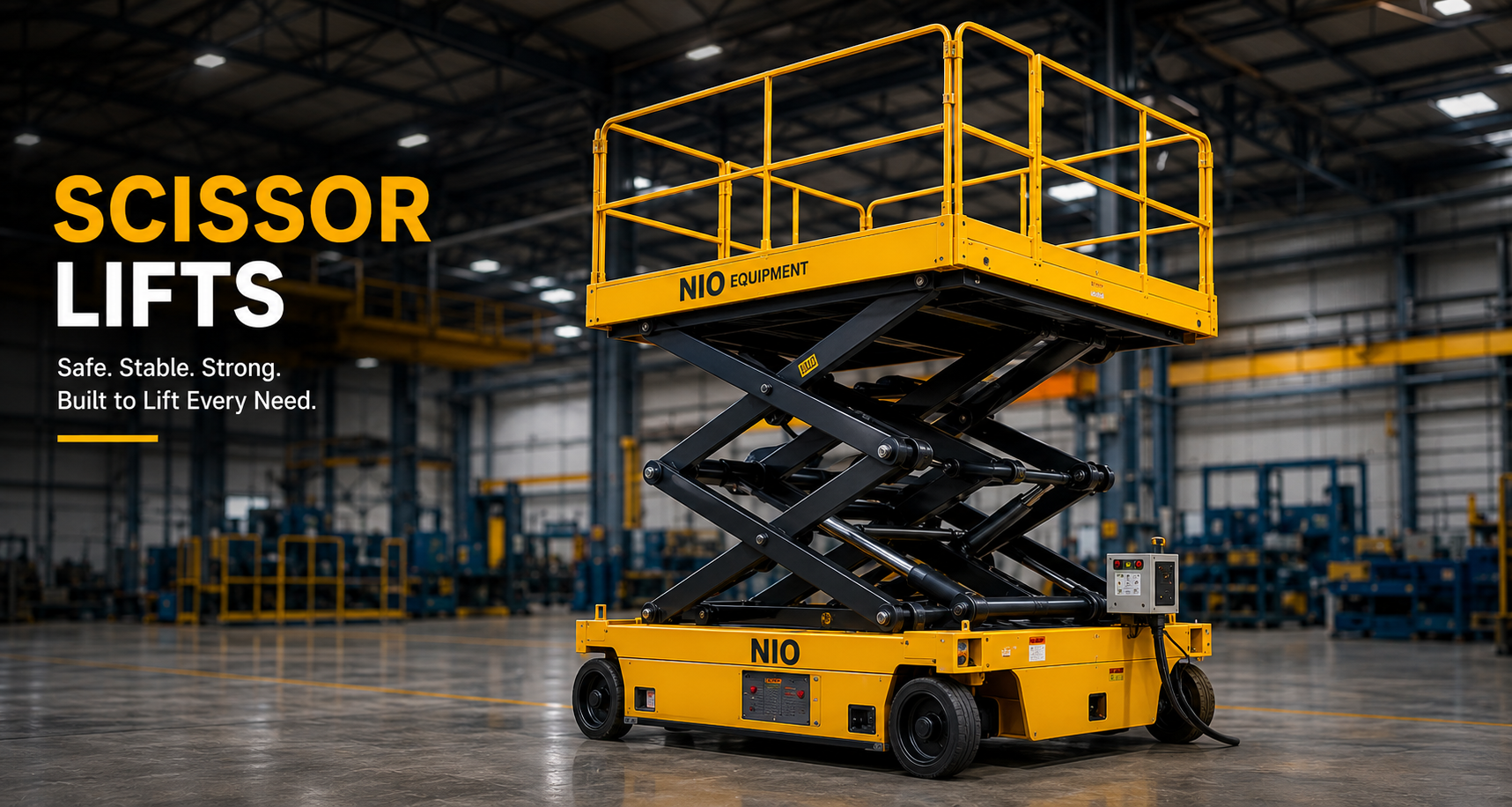
Scissor lifts have become indispensable in manufacturing, warehousing and maintenance operations. They provide safe elevated access for workers and materials, replacing ladders and improvised platforms that cause thousands of workplace injuries annually. However, like any industrial equipment, scissor lifts demand proper operation and regular maintenance to deliver on their safety promise.
1. Conduct a Pre-Use Inspection Every Shift
Before operating a scissor lift, the operator should conduct a walk-around inspection. Check hydraulic hoses for leaks, inspect the platform guardrails for damage, verify that the emergency stop button works, test the controls at ground level and ensure the base area is clean and free of debris. This 5-minute check prevents most common incidents.
2. Never Exceed the Rated Load Capacity
Every scissor lift has a clearly marked rated load capacity — this includes the weight of workers, tools and materials on the platform. Overloading compromises the hydraulic system and structural integrity, creating a tipping hazard. When in doubt, weigh the load before placing it on the platform.
3. Operate Only on Level, Firm Surfaces
Scissor lifts are designed to operate on level ground. Uneven or soft surfaces can cause tipping, especially at full height. If the work area has slopes, use only scissor lifts rated for the gradient. Nio Equipment's heavy-duty scissor lifts include levelling sensors that prevent elevation on unsafe slopes.
4. Keep the Platform Gate Closed During Operation
The platform gate or chain must remain closed and latched whenever the platform is elevated. Leaning over guardrails or standing on the mid-rail to extend reach is strictly prohibited — it shifts the centre of gravity and creates a fall hazard.
5. Beware of Overhead Obstructions
Before raising the platform, look up. Check for overhead beams, electrical lines, piping, sprinkler heads and ceiling-mounted equipment. Crushing injuries from overhead contact are among the most serious scissor lift incidents and are entirely preventable with a quick overhead scan.
6. Never Move the Lift While Elevated
Unless the scissor lift is specifically designed and rated for driving at height (driveable models), always lower the platform to the travel position before moving the machine. Moving a non-driveable lift while elevated can cause tipping due to the high centre of gravity.
7. Ensure Proper Operator Training
Only trained and authorised personnel should operate a scissor lift. Training should cover pre-use inspection, safe operating procedures, load limits, emergency procedures and hazard recognition. Nio Equipment provides operator training as part of every installation — and refresher training on request.
8. Follow the Manufacturer's Maintenance Schedule
Regular maintenance is not optional — it is a legal and practical requirement. Follow the manufacturer's recommended service intervals for hydraulic fluid, filters, pins, bushings and electrical components. A well-maintained scissor lift is a safe scissor lift.
For maintenance support, spare parts or AMC plans for your Nio Equipment scissor lifts, contact our service team. We offer rapid-response service across India with genuine spare parts and factory-trained technicians.