Why Pune MIDC Factories Are Switching to Hydraulic Goods Lifts
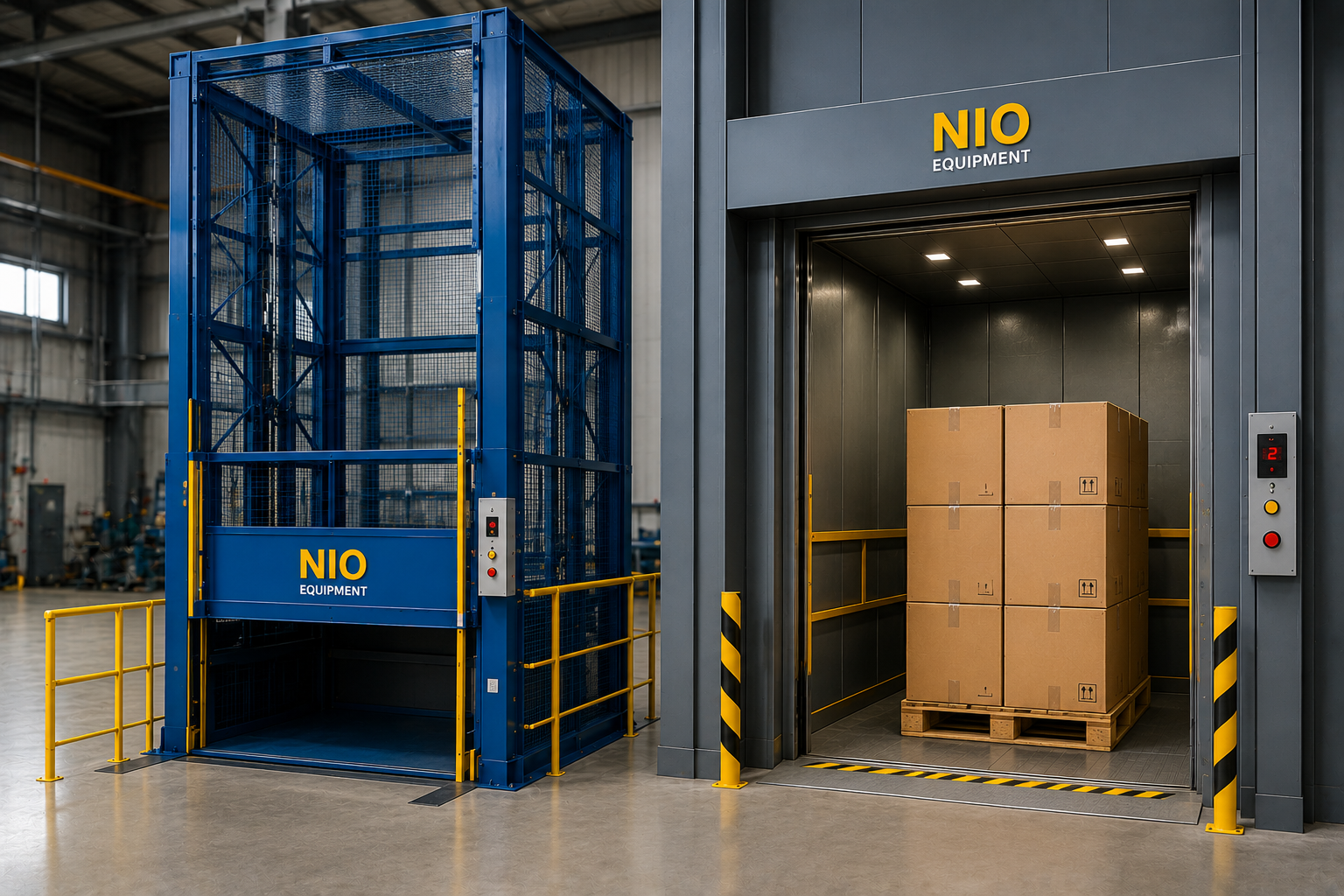
Pune’s MIDC belt — stretching from Bhosari and Pimpri-Chinchwad in the north through Chakan, Talegaon and Ranjangaon to the east — is one of India’s most concentrated industrial corridors. Over 8,000 manufacturing companies operate across 19 MIDC zones in the Pune district alone. Many of these factories are 2-4 storey structures built in the 1990s and 2000s, originally equipped with chain-pulley hoists or rope-and-drum lifts for inter-floor material movement.
In the last 3-4 years, a clear trend has emerged: Pune MIDC factories are replacing these ageing hoists with modern hydraulic goods lifts. Having installed goods lifts in factories across Bhosari, Pimpri-Chinchwad, Chakan, Ranjangaon, Hinjewadi and Talegaon MIDCs, we see the same drivers behind every upgrade decision.
1. Factory Audits Are Getting Stricter
Whether it’s an OEM vendor audit, ISO recertification or a pharmaceutical FDA inspection, auditors now scrutinize vertical material transport as part of safety and quality compliance. Chain hoists without interlocked doors, overload protection or emergency stop systems are red flags. Several Pune MIDC factories have reported audit non-conformances specifically citing their goods transport arrangements. A modern hydraulic goods lift with interlocked landing doors, overload sensors and emergency lowering ticks every audit box.
2. Labour Costs Are Rising, Availability Is Falling
The chain hoist in a typical 3-storey factory requires 2-3 dedicated operators per shift — one at each floor to load, signal and unload. With Pune’s industrial labour costs rising 8-12% annually and factory-floor worker availability declining (many workers prefer logistics or gig-economy roles), automating inter-floor material movement makes economic sense. A hydraulic goods lift replaces 2-3 hoist operators with a single push-button call at each landing.
3. Multi-Storey Expansion Is More Common Than Plot Expansion
MIDC plot sizes in Pune are fixed — you can’t buy the neighbouring plot. So when factories need more capacity, they build upward. A factory that was originally a single-storey shed is now 3-4 floors. This vertical expansion makes inter-floor material movement the single biggest throughput constraint. A hydraulic goods lift, with its small footprint and flexible shaft positioning, is often the most practical retrofit for an existing building.
4. Power Grid Reliability Has Improved
Five years ago, frequent power outages in Ranjangaon and Chakan MIDCs made factory managers hesitant about electrically operated lifts. Today, MSEDCL supply reliability in Pune’s major MIDCs has improved significantly, and modern goods lifts come with UPS-backed emergency lowering — so even during an outage, the lift safely descends to the nearest floor. This has removed the last major objection.
5. Local Manufacturers Mean Faster Delivery and Service
Pune’s advantage is that goods lift manufacturers like Nio Equipment are right inside the MIDC belt. Our facility in Bhosari MIDC is 15 minutes from Pimpri-Chinchwad, 25 minutes from Chakan, 40 minutes from Ranjangaon and under an hour from Talegaon. This means site surveys happen within 24 hours, installations are supervised daily and breakdown service response is same-day. Compare this with ordering from a distant city where the manufacturer visits once during installation and you’re on your own after that.
What to Consider Before Ordering
If you’re planning a goods lift for your Pune MIDC factory, here are the key decisions to make upfront:
- Load capacity: What is the heaviest single load (including pallet/trolley weight) you will move? Add a 25% margin for future growth.
- Travel height and stops: How many floors need service? Measure floor-to-floor height precisely — old factory buildings often have non-standard floor heights.
- Platform size: What is the largest pallet, trolley or roll cage you need to fit? Allow 150-200mm clearance on each side.
- Shaft space: Do you have an existing shaft or will you need to cut through floor slabs? An experienced manufacturer will provide civil drawings.
- Door configuration: Single-entry, through-type (opposite sides) or adjacent doors — depends on your material flow direction.
- Power supply: 3-phase supply is standard. Check your connected load capacity with MSEDCL if adding a large motor.
- Compliance: Pharma units need SS cladding and IP-rated panels; food processing needs washdown compatibility; automotive OEM suppliers may need CE-marked components.
Get a Site Survey
Nio Equipment offers free site surveys for factories in Pune MIDC zones. Our engineer will visit your facility, measure the shaft space (or recommend shaft positioning), document load and height requirements and provide a detailed quotation within 3 working days. We’ve installed goods lifts in Bhosari, Pimpri-Chinchwad, Chakan, Ranjangaon, Hinjewadi, Talegaon, Hadapsar, Moshi and Baramati MIDCs — chances are we’ve already worked in your industrial zone.