Hydraulic Goods Lift for a Textile Factory in Surat
⚠ The Challenge
The client operated a 4-storey textile weaving and processing facility in Surat. Heavy fabric rolls (400-600 kg each) were being moved between floors using a rope-and-pulley manual hoist — a slow, labour-intensive process that required 4 workers per shift and caused frequent back injuries. During peak season, the hoist became a bottleneck, delaying dispatch by 2-3 hours daily. The client needed a reliable, low-maintenance goods lift that could handle 2-tonne loads across 4 stops, fit within the existing shaft opening and operate in a dusty, humid textile environment.
✔ Our Solution
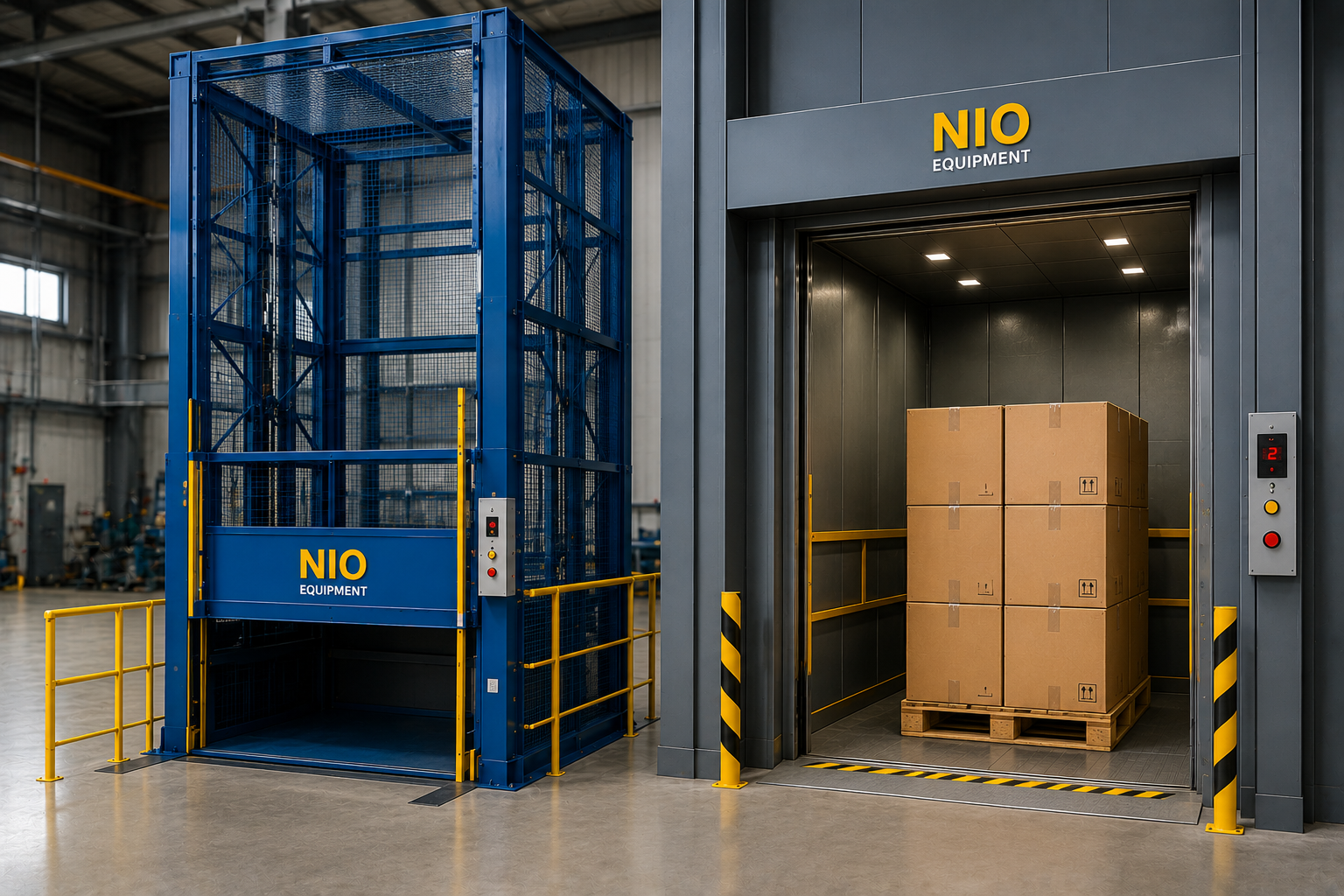
Nio Equipment designed and installed a customized hydraulic goods lift with a 2-tonne capacity, 12-metre travel height and 4 landing stops. The platform was sized at 2m × 2.5m to accommodate two fabric roll trolleys simultaneously. Key features included dust-sealed hydraulic cylinders for the textile environment, interlocked collapsible gates at each landing, overload protection and an emergency manual lowering system. The lift was installed within the existing shaft with minimal civil modification. The entire project — from site survey to commissioning — was completed in 6 weeks.
Key Results
The Challenge
This Surat-based textile manufacturer produces woven and processed fabrics across a 4-storey facility. Raw fabric rolls arrive at the ground floor, undergo weaving on the first and second floors, processing and finishing on the third floor, and final inspection and packing on the fourth floor. The entire production flow depends on moving heavy fabric rolls (400-600 kg each) between floors efficiently.
For years, the factory relied on a rope-and-pulley manual hoist for inter-floor transfers. This required a dedicated crew of 4 workers, took 15-20 minutes per load cycle and created a severe bottleneck during peak production. More critically, the manual lifting process caused 8-10 back and shoulder injuries annually — a significant safety and compliance concern.
Our Solution
After a detailed site survey, Nio Equipment recommended a customized hydraulic goods lift with a 2-tonne capacity. The platform was sized at 2m × 2.5m to fit two fully loaded fabric roll trolleys simultaneously, allowing operators to prepare the next load while the lift is in transit.
Given the textile environment — high dust, humidity and lint — we specified dust-sealed hydraulic cylinders, IP54-rated electrical components and a powder-coated mild steel structure. Interlocked collapsible gates at each landing prevent access while the lift is in motion, and an overload sensor with audible alarm stops operation if the load exceeds 2 tonnes.
Installation and Commissioning
The lift was installed within the factory's existing shaft opening, requiring only minor civil modifications to the pit and landing door frames. Installation was phased to minimize production disruption — structural work was completed over a weekend shutdown, and electrical and hydraulic commissioning was done during the following week's second shift. Total project time from order to handover was 6 weeks.
Results and Impact
Within the first month of operation, the factory reported a 45% reduction in inter-floor transfer time. The 4-worker hoist crew was redeployed to production tasks, and dispatch delays were eliminated entirely. Most importantly, there have been zero lifting injuries since installation — compared to 8-10 per year previously. The client achieved full payback within 14 months from labour cost savings alone.
“The goods lift has transformed our inter-floor operations. What used to take 4 workers and 20 minutes now takes one operator and 3 minutes. We should have installed this years ago.”— Plant Manager, Textile Manufacturer, Surat